Know your roof
Where Valrico roofs actually leak
Most homes in Valrico went up between the late 1980s and the 2000s, and the typical owner has been in the same house since around 2009. That means a lot of original roofs, right at the age when certain parts start to give out. Here's where the water usually gets in, by roof type.
| Roof type | Where it usually leaks | What's normally done |
|---|
| Concrete or clay tile | Worn underlayment under the tiles, cracked or slipped tiles, cracked mortar on hips and ridges, rusted vent pans, valleys | Replace broken tiles and reseal; if the underlayment is worn out, lift the tiles, lay new underlayment and reset them |
| Asphalt shingle | Cracked rubber pipe boots, wind-lifted or missing shingles, nails backing out, worn flashing at walls and chimneys | Replace the boot or flashing, re-nail and seal or replace shingles. Often done in a few hours |
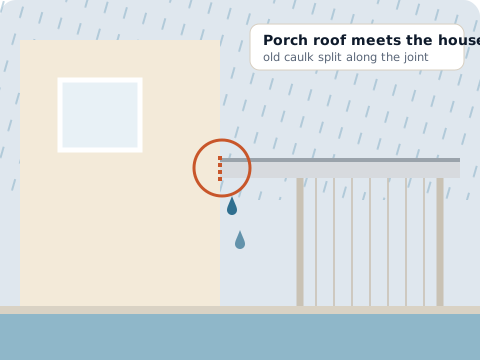
| Flat, patio and lanai roofs | The joint where the porch roof meets the house, split seams, water that ponds and sits | Seal the transition properly with membrane, not just caulk; patch or replace the membrane |
| Metal | Loose or rusted screws, worn rubber washers, seams and ridge caps | Replace fasteners and washers, reseal seams |
| Mobile and manufactured homes | Seams, vents, and the edges of roof-overs | Reseal seams and penetrations; replace failed sections |
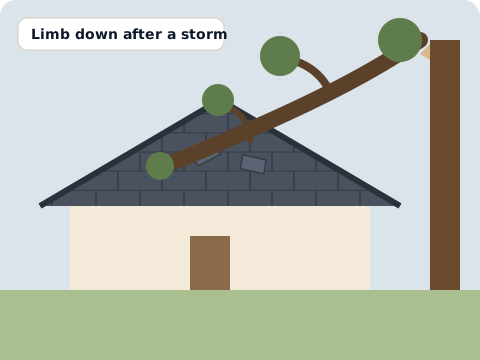
On every roof type, two things cause a lot of trouble here. One is clogged gutters, which back water up under the roof edge. The other is tree limbs. Valrico has plenty of big old oaks, and Hurricane Milton brought a lot of them down in October 2024. Squirrels chewing through plastic vent stacks is another one we find more often than you'd think.
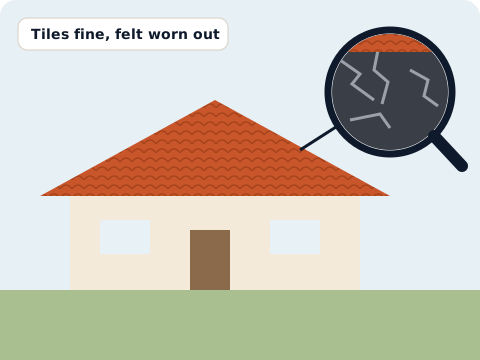
Why does my tile roof leak when the tiles look fine?
Because the tiles aren't what keeps the water out. Concrete and clay tiles can last 40 to 50 years or more. The underlayment underneath, the real waterproof layer, usually needs replacing at around 20 to 25 years in Florida's heat. River Hills was built between 1989 and 2005, so a lot of its tile roofs are at that point now. The usual fix is a lift and relay: the tiles come off, new underlayment goes down, and the good tiles go back on. You keep the look and the tile you paid for.
Is the leak right above the stain?
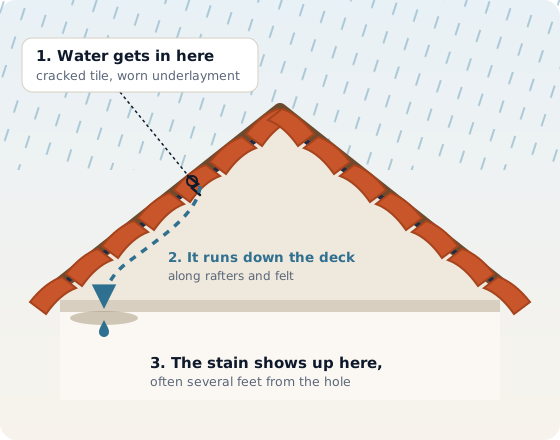
Usually not. Water travels along the decking and rafters before it drips, so the hole can be several feet uphill from the stain. Most leaks start where something pokes through the roof (pipes, vents, skylights, chimneys) or where two roof surfaces meet. That's why our roof leak detection starts in the attic.
Why does my roof only leak in heavy rain?
Not all rain is the same. A gentle shower runs straight down the roof. Valrico's summer storms don't. From June through September, sea-breeze thunderstorms build most afternoons and come in with gusty wind. That pushes rain sideways, and sometimes uphill, under shingle edges, flashing and tile laps. A heavy burst can also overload valleys and gutters faster than they drain.
If your ceiling only gets wet in big storms, or only when the wind comes from one direction, we usually check:
- flashing on the side of the house that faces the storm
- valleys, where two roof slopes meet and water runs fastest
- the roof edge and gutters, where overflow backs up
- pipe boots and vents on that same side
When you call, tell us which way the rain was blowing. It saves time on the roof.